

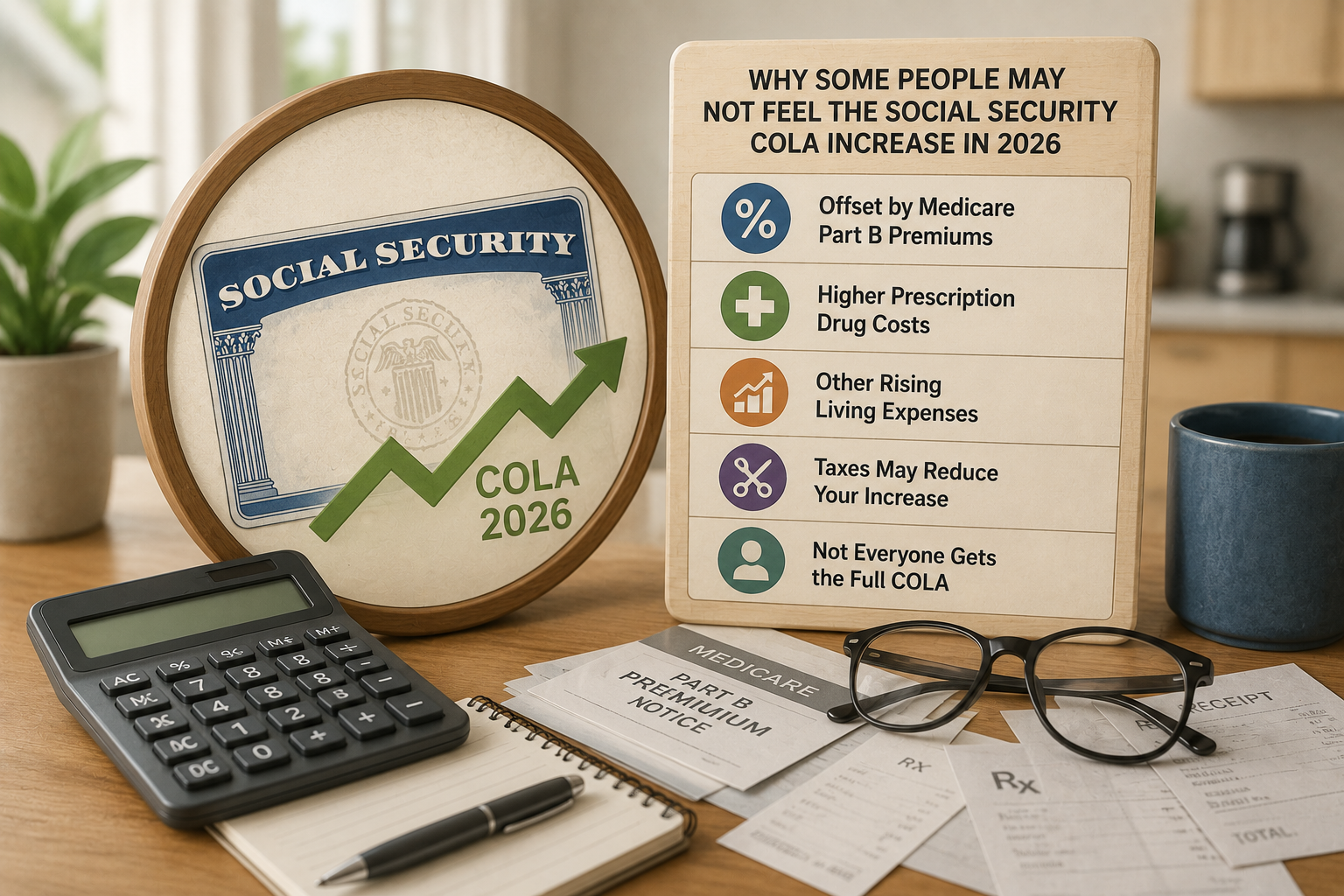
Millions of Americans welcomed the news that Social Security benefits increased by 2.8% in 2026. For retirees, disabled Americans, and Supplemental Security Income (SSI) recipients, any increase in monthly benefits is usually seen as positive news, especially at a time when many households continue to face financial pressure from rising living costs.
The annual Cost-of-Living Adjustment, commonly known as COLA, is designed to help Social Security benefits keep pace with inflation. In simple terms, it is meant to ensure that beneficiaries do not lose too much purchasing power when the prices of everyday goods and services increase. When inflation rises, Social Security payments are adjusted to help recipients keep up with those higher costs.
However, despite receiving a larger monthly payment, many beneficiaries may find that the increase does not feel as significant as they expected. Some retirees may notice only a small difference in their bank account after deductions are taken out. Others may find that the extra money disappears quickly because the cost of groceries, housing, healthcare, insurance, and utilities continues to rise.
This has become a common concern among Social Security recipients. While headlines often focus on the percentage increase, the reality is that what matters most is how much additional money people actually have available after paying their monthly expenses. For many households living on fixed incomes, even a modest increase in costs can offset much of the benefit gained from a COLA adjustment.
The situation highlights an important reality about Social Security. An increase in benefits does not always translate into a noticeable improvement in financial wellbeing. Factors such as Medicare premiums, taxes, rising healthcare expenses, housing costs, and inflation can all affect how much of the increase beneficiaries truly feel.
Understanding these factors can help explain why some retirees, SSI recipients, and disabled Americans may receive a larger Social Security payment in 2026 yet still feel that their financial situation remains largely unchanged.
1. The COLA Increase Sounds Bigger Than It Feels
When people hear that Social Security increased in 2026, many expect a major change in their monthly payment. But the truth is that a percentage increase does not always feel big in real life. The 2026 Social Security cost-of-living adjustment was 2.8%. That means benefits went up by 2.8%, not by a fixed amount for everyone. So the actual extra money depends on how much someone was already receiving before the increase.
For example, a person receiving a smaller monthly benefit will get a smaller dollar increase than someone receiving a larger benefit. If someone was receiving about $1,000 a month, a 2.8% increase would add about $28. If someone was receiving about $2,000 a month, the increase would be about $56. That is why two people can both receive the same COLA percentage but feel it very differently.
This is one reason many retirees feel disappointed when the increase arrives. News headlines may make the increase sound more powerful than it actually is. But when the money reaches the bank account, it may only be enough to cover one or two small bills.
The COLA is not designed to make people richer. It is meant to help benefits keep up with rising prices. For people already living on a tight budget, the increase may help a little, but it may not be enough to create real breathing space.
2. Medicare Premiums Can Take Part of the Increase
One of the biggest reasons some retirees may not feel the COLA increase is Medicare. Many people who receive Social Security also have Medicare Part B premiums taken directly from their monthly Social Security payment. This means the increase may appear on paper, but part of it can disappear before the money reaches the person’s bank account.
In 2026, the standard Medicare Part B premium increased to $202.90 per month. That was higher than the 2025 amount. For many retirees, this increase reduced the real benefit of the Social Security COLA. A person may hear that their Social Security benefit has gone up, but when Medicare is deducted, the actual amount deposited into their bank account may not feel much higher.
This can be frustrating because healthcare is already one of the biggest expenses for older Americans. Medicare helps with medical costs, but it is not free. Retirees may still have premiums, deductibles, copayments, prescription costs, dental bills, vision costs, and other health-related expenses.
So even if Social Security increases, healthcare costs can quickly absorb part of that increase. For someone who regularly visits doctors or takes several medications, the extra money from COLA may be used almost immediately.
This is why retirees should always look at their net payment, not just the gross benefit amount. The gross amount is what Social Security says before deductions. The net amount is what actually lands in the bank account.
3. Everyday Prices Are Still Eating Into Budgets
Another reason the COLA increase may not feel strong is that everyday costs remain high. Many people do not judge their finances by government percentages. They judge it by what they can buy at the grocery store, how much rent they owe, how much electricity costs, and whether they can afford their medication.
Even when inflation slows down, prices do not always return to where they used to be. A loaf of bread, a carton of eggs, a tank of gas, or a monthly utility bill may still cost much more than it did a few years ago. This means a Social Security increase can arrive, but people may still feel like they are falling behind.
For retirees, SSI recipients, and disabled Americans, this is a serious issue because many live on fixed incomes. They do not always have an easy way to increase their earnings. If food prices rise, rent goes up, insurance becomes more expensive, and medical costs increase, the COLA may only soften the pressure rather than remove it.
This is why some people say they “did not feel” the increase. It is not because the increase did not happen. It is because the extra money was quickly swallowed by the cost of living.
For example, if someone receives $50 more per month but their rent rises by $40, they are only left with $10 extra. If their grocery bill also rises, even that disappears.
4. Taxes and Other Deductions Can Reduce the Real Benefit
Some Social Security recipients may also lose part of the benefit increase through taxes or other deductions. Not everyone pays federal income tax on Social Security, but some people do. This usually depends on their total income, including pensions, wages, retirement account withdrawals, or other sources of money.
For retirees who have extra income, part of their Social Security may be taxable. When their benefit increases, their taxable income may also increase slightly. This does not mean everyone will owe more tax, but for some households, taxes can reduce the real value of the COLA increase.
Other deductions can also affect what people actually receive. Some people may have Medicare deductions. Others may have overpayment recovery, unpaid debts, or benefit adjustments. In these cases, the Social Security increase may be partly or fully offset by money being taken out before the payment arrives.
This is why it is important for beneficiaries to check their official Social Security notice carefully. The notice usually explains the new benefit amount, deductions, and final payment. Looking only at the announced COLA percentage can be misleading because it does not show the full picture.
A person may think, “My benefit increased, so why does my deposit look almost the same?” The answer may be hidden in the deductions. The COLA may have raised the benefit, but another cost may have increased at the same time.
The real question is not only how much Social Security increased. The real question is how much more money the person actually receives after deductions.
5. The COLA Helps, But It Does Not Solve Bigger Financial Problems
The 2026 COLA increase will help millions of Americans, but it will not solve every financial problem. Many retirees and disabled Americans were already struggling before the increase arrived. Some were behind on bills. Some were using credit cards for groceries. Some were choosing between medicine and other household needs. For people in that situation, a modest monthly increase may help, but it may not change their overall financial position.
This is the painful reality of living on a fixed income. When costs rise in many areas at the same time, a small increase can disappear quickly. Rent, food, medical bills, transport, insurance, and utilities can all place pressure on the same monthly payment.
The COLA is meant to protect purchasing power. In simple words, it tries to help Social Security keep up with rising prices. But it does not always match the exact expenses older Americans face. Seniors often spend more on healthcare than younger workers. Many also spend a large part of their income on housing. If those costs rise faster than the COLA, beneficiaries may still feel worse off.
That is why some people may receive a higher Social Security payment in 2026 but still feel financially stretched. The increase is real, but so are the rising costs around them.
For many households, the best thing to do is review the new payment amount, check all deductions, update the monthly budget, and look for extra help if needed. Some people may qualify for food assistance, Medicare savings programs, energy assistance, or local support programs. The COLA is helpful, but for many Americans, it is only one part of a much bigger financial picture.
