
Why So Many People with Bad Credit Look for Personal Loans
If you have bad credit and suddenly need money, you are not alone. Every day, thousands of people find themselves searching for a personal loan because they are facing an unexpected expense that cannot wait. It could be a car repair that is stopping you from getting to work, a medical bill that arrived without warning, or an urgent home repair that needs immediate attention. Many people assume that having a low credit score automatically means they cannot borrow money, but that is not always the case.
The reality is that financial difficulties can happen to anyone. A missed payment during a difficult period, a job loss, unexpected medical expenses, or even a divorce can damage a person’s credit score. Unfortunately, once your credit score drops, many traditional lenders become more cautious. This often leaves borrowers feeling frustrated and unsure where to turn.
Personal loans can provide a solution for people who need access to money quickly. Unlike credit cards, a personal loan usually provides a fixed amount of money that is repaid over a set period of time through regular monthly payments. This can make budgeting easier because you know exactly how much you owe each month.
However, not every loan is worth taking. Some lenders genuinely want to help borrowers get back on their feet, while others take advantage of people who are desperate for financial help. That is why understanding how personal loans work is so important before you submit an application. A little research today can help you avoid expensive mistakes tomorrow and put you in a much stronger financial position.
How Lenders Decide Whether to Approve Your Application
Many people believe that lenders only care about credit scores when reviewing a loan application. While your credit score is important, it is only one part of the bigger picture. Lenders understand that a number on a credit report does not always tell the full story about a person’s financial situation.
When you apply for a personal loan, lenders often look at several factors. One of the most important is your income. They want to know whether you have a reliable source of money coming in each month that can be used to repay the loan. Someone with a steady job and consistent income may have a better chance of approval than someone whose income changes dramatically from month to month.
Lenders may also examine your employment history. If you have been working with the same employer for a long period, it can demonstrate stability and reliability. They may also look at your existing financial obligations to determine how much of your income is already being used to pay other debts.
Your recent payment history is another factor. Even if your credit score is low, making your recent payments on time can show lenders that you are taking steps to improve your financial habits. Some lenders also review your bank account activity to better understand how you manage your money.
Because every lender uses different criteria, one company may decline your application while another may approve it. This is why comparing several lenders is often one of the smartest things you can do before accepting any loan offer.
The Biggest Mistakes People Make When Applying for a Bad Credit Loan
When people urgently need money, they often make decisions based on emotion rather than logic. This is understandable because financial stress can make anyone feel pressured to act quickly. Unfortunately, rushing into a loan agreement without proper research can lead to costly mistakes that create even more financial problems in the future.
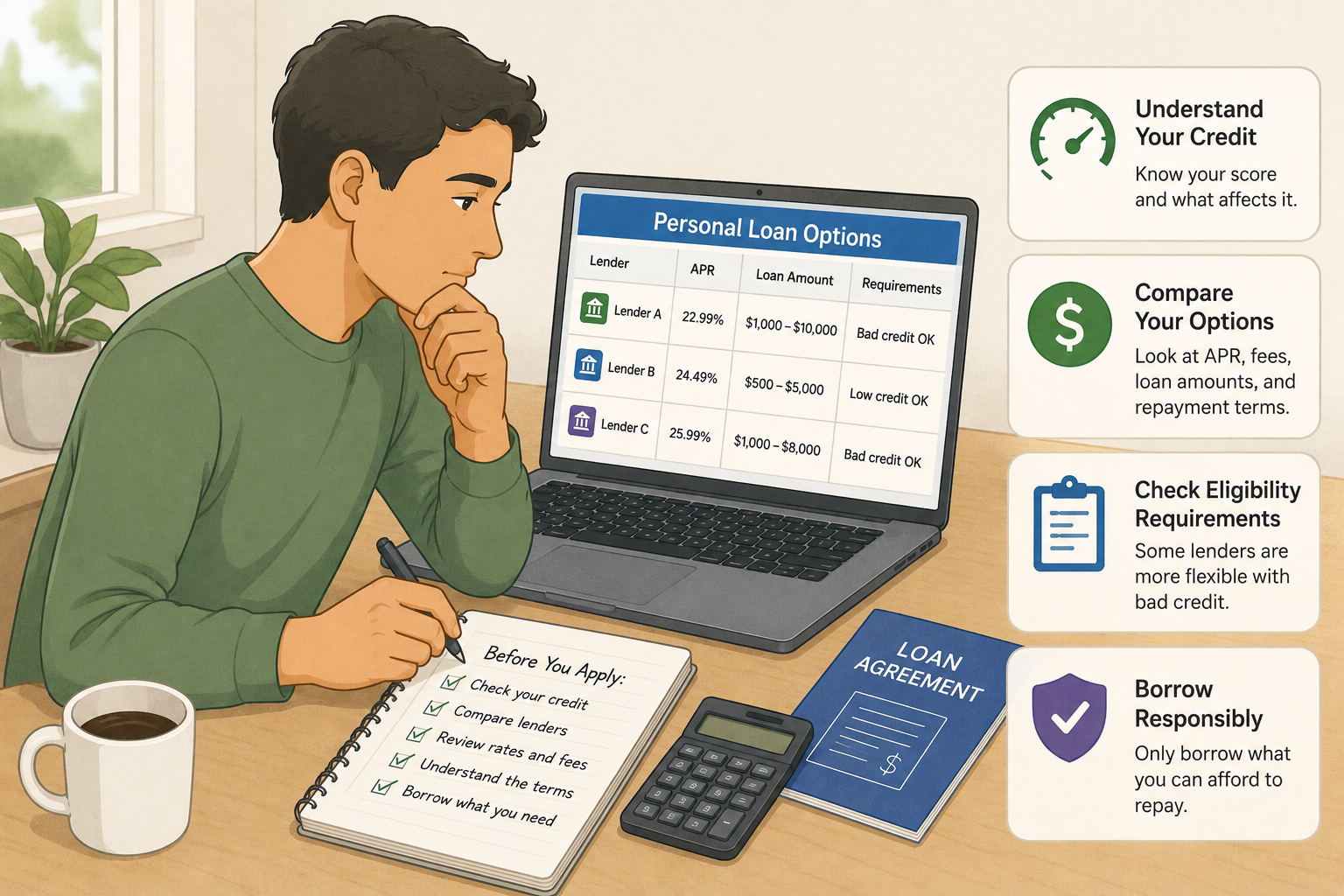
One common mistake is accepting the first loan offer that appears online. Many borrowers are so relieved to receive an approval that they immediately accept the offer without comparing it to other lenders. This can be expensive because interest rates and fees can vary significantly from one lender to another. Spending a little extra time comparing options may save hundreds or even thousands of dollars.
Another mistake is borrowing more money than necessary. When a lender offers a larger loan amount than requested, it can be tempting to accept it. However, every additional pound or dollar borrowed increases the total amount that must eventually be repaid. Borrowing only what you genuinely need can help keep monthly payments manageable.
Some borrowers also fail to read the loan agreement carefully. Hidden fees, late payment penalties, and other charges can increase the cost of borrowing. Understanding every detail before signing is essential.
Perhaps the most dangerous mistake is choosing a lender simply because they promise guaranteed approval. Reputable lenders always review applications carefully before making a lending decision. If an offer sounds too good to be true, there is a good chance that it deserves a closer look before moving forward.
How to Find the Best Personal Loan for Your Situation
Finding the right personal loan is not simply about getting approved. It is about finding a loan that solves your problem without creating a new one. The best loan for one person may not be the best option for another because financial situations vary from person to person.
The first step is understanding exactly how much money you need. Borrowing too little may leave you struggling to cover your expenses, while borrowing too much could increase your monthly payments unnecessarily. Having a clear goal before applying can help you make better decisions.
Next, compare multiple lenders rather than relying on a single offer. Many lenders allow potential borrowers to check eligibility without affecting their credit score. This gives you an opportunity to compare rates, repayment terms, and monthly payment estimates before making a commitment.
Pay close attention to the total cost of the loan rather than focusing only on the monthly payment. A lower monthly payment may seem attractive, but if the repayment period is much longer, you could end up paying significantly more over time.
Reading customer reviews can also be useful. Reviews may reveal how lenders treat their customers, how quickly they respond to questions, and whether borrowers have experienced unexpected problems during the loan process.
Most importantly, take your time. Financial decisions should rarely be rushed. A loan can be a useful tool when used correctly, but it should always be chosen carefully. Making an informed decision today can help protect your finances and reduce stress in the future.
Can a Personal Loan Help You Rebuild Your Credit?
Many people view a personal loan simply as a way to access money during a difficult period. However, a personal loan can also play a role in helping someone improve their credit over time. While there are no guarantees, responsible borrowing habits can gradually strengthen your financial profile.
Every time you make a payment on time, you demonstrate that you can manage credit responsibly. Over months and years, a consistent record of timely payments can have a positive impact on your credit history. This is one reason why some people use personal loans as part of a broader plan to rebuild their finances.
That said, a personal loan is not a magic solution. Taking out a loan without a clear repayment plan can create additional problems. If payments are missed, your credit score may fall even further. This is why it is essential to borrow only what you can realistically afford to repay.
Creating a budget before taking out a loan can help. Knowing exactly where your money goes each month allows you to determine whether a loan payment will fit comfortably into your finances. It also reduces the risk of falling behind later.
Improving your credit is usually a gradual process rather than an overnight transformation. A personal loan may help when combined with other positive financial habits, such as paying bills on time, reducing existing debt, and avoiding unnecessary borrowing. Over time, these actions can work together to improve your financial health and open the door to better borrowing opportunities in the future.
