

Every year, millions of Americans hear alarming headlines claiming that Social Security is running out of money. Some reports suggest benefits could be cut in the future. Others warn that the system is heading toward a financial crisis. As a result, many retirees, workers, disabled Americans, and future beneficiaries are asking the same question: Will Social Security actually run out of money?
The short answer is no, Social Security is not expected to completely disappear. However, the program is facing serious financial challenges that lawmakers will eventually need to address. Understanding what is really happening is important because many people misunderstand the situation. Some believe Social Security will suddenly stop sending checks. Others think the program will collapse entirely. Neither of those scenarios reflects what current projections show.
According to the latest Social Security Trustees Report, the program’s retirement trust fund is expected to face financial pressure in the coming years, but Social Security will still continue collecting payroll taxes and paying benefits. The real concern is whether future revenue will be enough to cover all promised benefits without changes to the system.
The future of Social Security affects nearly everyone. Current retirees depend on it for income, workers contribute to it through payroll taxes, and younger generations want to know whether benefits will still be available when they retire. Understanding the facts rather than the headlines can help Americans make better financial decisions and prepare for the future.
Social Security Is Not Going Bankrupt, But It Does Face Financial Challenges
One of the biggest misconceptions about Social Security is that it is going bankrupt. In reality, Social Security is not expected to run out of all money. Even if the trust funds become depleted, workers and employers will continue paying payroll taxes into the system.
Social Security is primarily funded through payroll taxes collected from millions of workers across the country. Those taxes continue to generate revenue every year. The problem is that the program is currently paying out more in benefits than it receives in some years, causing it to draw from trust fund reserves to make up the difference.
Several factors contribute to this challenge. Americans are living longer than previous generations, which means benefits are being paid for more years. At the same time, birth rates have declined, resulting in fewer workers paying into the system compared with the number of retirees receiving benefits. Lower projected immigration levels have also contributed to concerns about future revenue growth.
These demographic changes have created a situation where the number of beneficiaries is growing faster than the number of workers supporting the system. While Social Security still collects substantial revenue every year, experts agree that adjustments will likely be needed to maintain long-term financial stability.
The key point is that Social Security is facing a funding gap, not a complete disappearance of funding. Understanding this distinction helps separate reality from fear-based headlines.
What the Latest Social Security Projections Actually Show
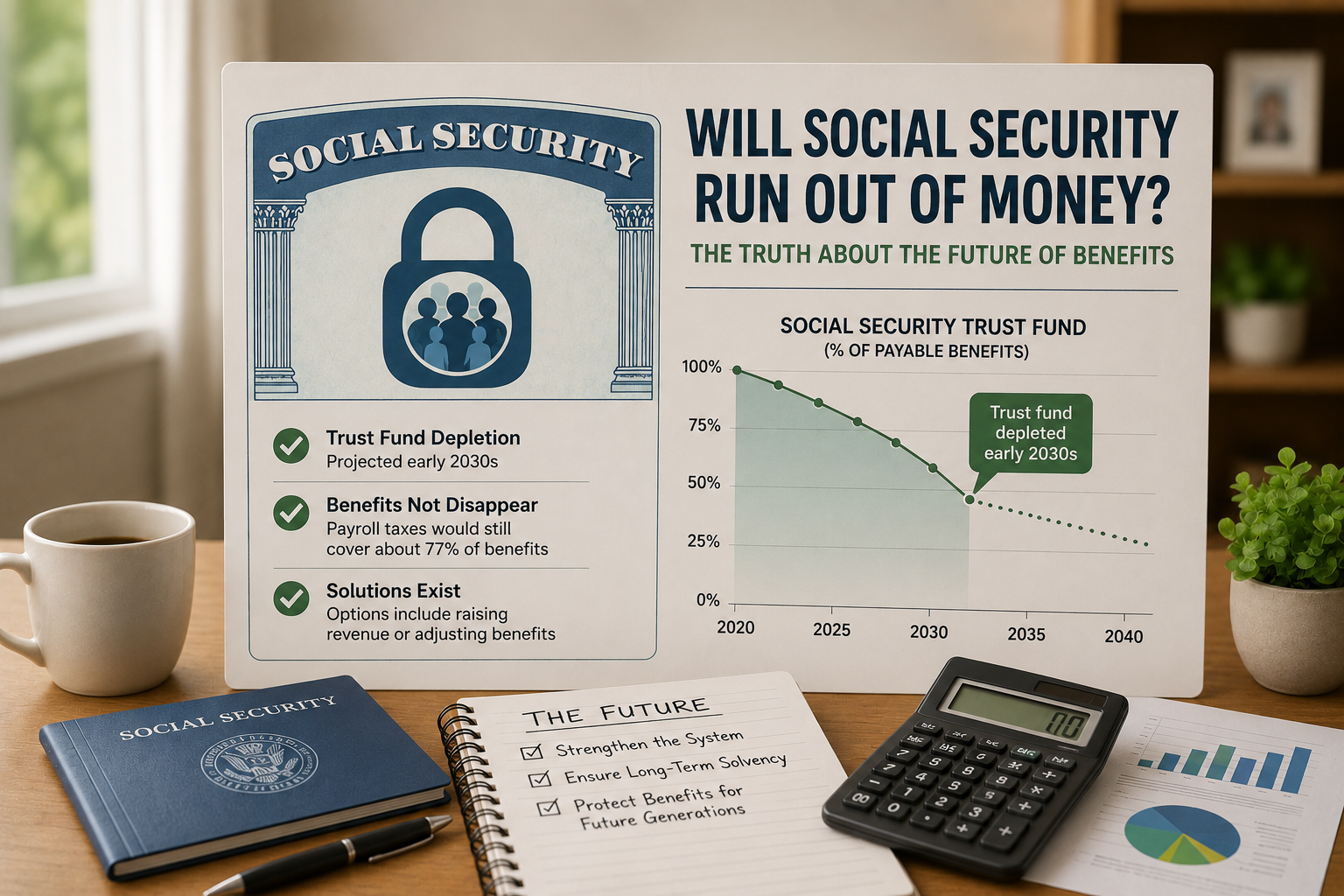
The latest projections from the Social Security Trustees provide a clearer picture of the situation. According to the 2026 Trustees Report, the Old-Age and Survivors Insurance trust fund is projected to become depleted in the fourth quarter of 2032 if no legislative changes are made. At that point, ongoing income would still be sufficient to pay approximately 78% of scheduled retirement benefits.
When looking at the combined retirement and disability trust funds, projections indicate that the combined reserves could support about 83% of scheduled benefits after 2034 without congressional action.
This is where many people become confused. A depleted trust fund does not mean benefits suddenly stop. Instead, it means the system would rely primarily on incoming payroll tax revenue rather than accumulated reserves. Benefits would continue to be paid, but not necessarily at the full levels currently scheduled under law.
The Disability Insurance trust fund is currently in much stronger shape and is projected to remain financially stable throughout the long-term forecast period.
Although these projections sound concerning, it is important to remember that lawmakers have many years to address the issue. Similar concerns have arisen in the past, and Congress has previously made changes to strengthen Social Security’s finances. Most experts believe some combination of reforms will eventually be considered before the projected depletion dates arrive.
What Could Congress Do to Protect Future Benefits?
Whenever discussions about Social Security’s future arise, attention quickly turns to possible solutions. Lawmakers have several options available, although each comes with political challenges.
One frequently discussed option is increasing the amount of wages subject to Social Security taxes. Currently, earnings above a certain threshold are not subject to Social Security payroll taxes. Some proposals would require higher earners to contribute more, generating additional revenue for the system.
Another possibility involves gradually increasing the retirement age. Since Americans are living longer on average, some policymakers argue that retirement ages should reflect longer life expectancies. Critics, however, point out that not everyone can continue working into older age due to health or employment limitations.
Other proposals include modifying benefit formulas, adjusting payroll tax rates, changing cost-of-living calculations, or using a combination of several approaches. Some experts argue that smaller changes implemented sooner could reduce the need for more dramatic adjustments later.
While political disagreements continue, the important point for beneficiaries is that there are multiple options available. Social Security’s financial challenges are significant, but they are generally viewed as solvable if policymakers choose to act.
What Workers, Retirees, and Future Beneficiaries Should Do Now
While policymakers debate solutions, individuals should focus on what they can control. One of the biggest mistakes people make is assuming Social Security will provide all the income they need during retirement. Even if the program remains strong, relying entirely on Social Security can create financial risk.
Workers should regularly review their Social Security earnings records to ensure future benefits are calculated accurately. Creating a my Social Security account allows individuals to view estimated benefits and verify earnings history. Understanding your projected benefit can help you plan more effectively.
Retirees should stay informed about changes to Social Security, Medicare, and cost-of-living adjustments. These programs often work together and can significantly affect retirement income.
Younger workers should not panic about Social Security disappearing. Current projections do not suggest benefits will vanish. However, building additional retirement savings through employer-sponsored plans, IRAs, personal investments, or other financial strategies remains important.
The future of Social Security will likely involve policy changes at some point. The exact solution remains uncertain. What is clear is that Social Security continues to play a critical role in the lives of tens of millions of Americans and remains one of the most important retirement programs in the country.
Conclusion: The Truth About Social Security’s Future
The truth is that Social Security is not expected to run out of money completely, nor is it expected to disappear. What the latest projections show is that the system faces long-term funding challenges that may require action from Congress in the coming years. If no changes are made, benefits could eventually be reduced because payroll tax revenue alone would not cover all scheduled payments.
However, Social Security will continue collecting taxes and paying benefits. The real question is not whether the program will survive, but how policymakers will strengthen it for future generations.
For current retirees, workers, and future beneficiaries, the best approach is to stay informed, monitor official updates, and build a retirement plan that does not rely solely on Social Security. While the headlines can be alarming, the facts show that Social Security faces challenges, not extinction.
