
Many Social Security recipients entered 2026 expecting bigger monthly checks after the Social Security Administration announced a 2.8% Cost-of-Living Adjustment (COLA). News headlines focused on the increase, and many retirees, disabled Americans, and SSI recipients looked forward to receiving more money to help with rising expenses.
However, after the first payments arrived, some beneficiaries were surprised. While their Social Security benefit technically increased, the amount that actually reached their bank account did not feel much larger. In some cases, the increase seemed far smaller than expected.
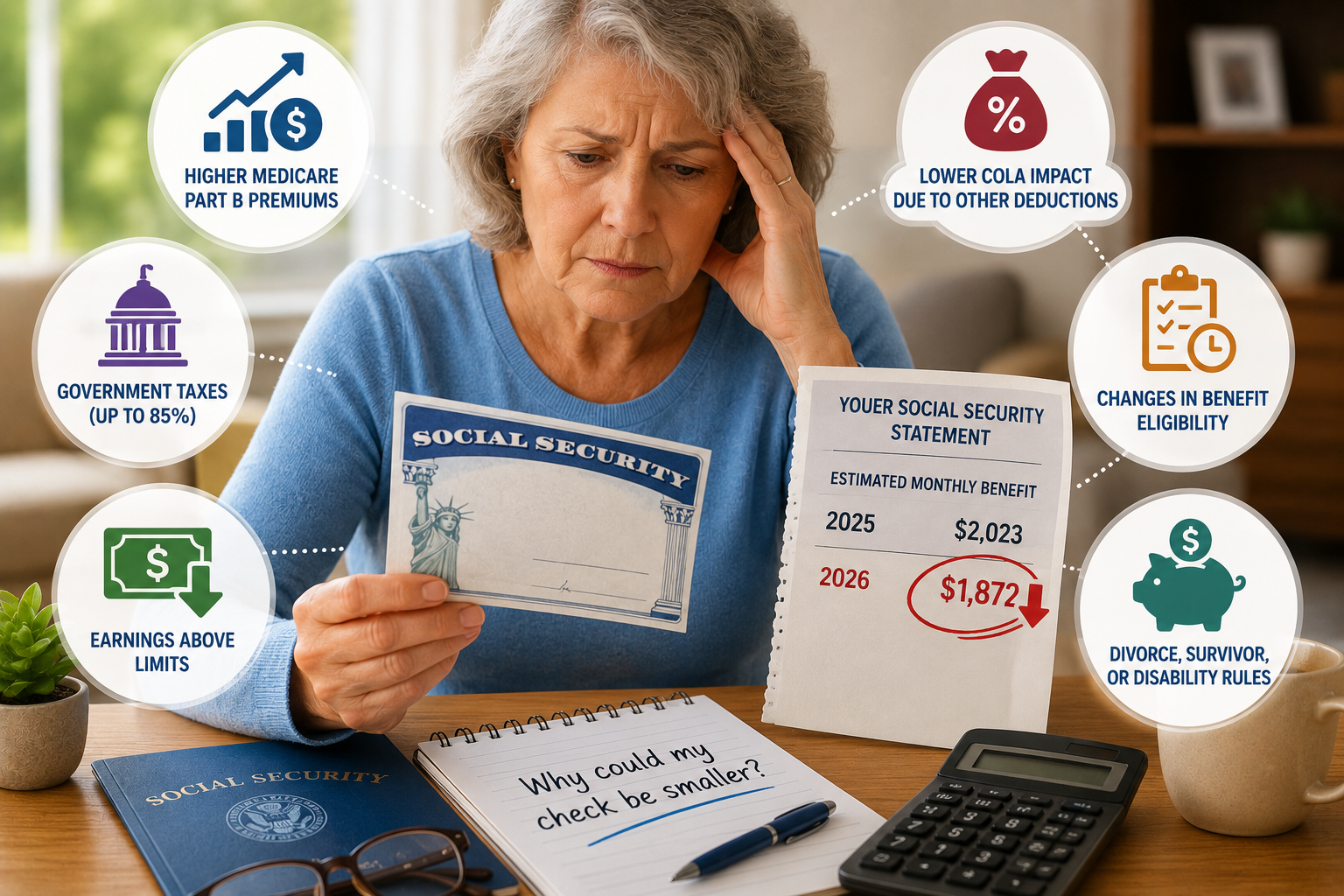
The reason is simple. A Social Security increase on paper does not always translate into significantly more spending money. Medicare premiums, taxes, inflation, healthcare costs, and other deductions can all reduce the real value of the increase. What looks like a raise may not feel like one when the money is finally deposited.
For many Americans who rely heavily on Social Security, understanding why this happens is important. Knowing where the money goes can help beneficiaries plan better, avoid surprises, and understand why their monthly budget may still feel tight even after receiving a COLA increase.
Medicare Premium Increases Could Eat a Large Part of Your Raise
One of the biggest reasons Social Security recipients may feel disappointed in 2026 is the increase in Medicare Part B premiums. Most retirees have their Medicare premium automatically deducted from their Social Security payment before the money reaches their bank account.
In 2026, the standard Medicare Part B premium increased from $185 to $202.90 per month. That is an increase of $17.90 every month. While the average Social Security recipient received about $56 more from the 2.8% COLA, nearly one-third of that increase was effectively consumed by the higher Medicare premium.
To understand how this works, imagine a retiree who expected their Social Security payment to increase by around $56 each month. After Medicare deductions, they may only see around $38 more actually reaching their account. The difference has already been taken out before the payment arrives.
Healthcare costs have been rising across the country, and Medicare expenses have followed the same trend. As a result, many beneficiaries feel like their Social Security increase is partially disappearing before they ever have a chance to use it.
This situation affects millions of retirees because Medicare and Social Security are closely connected. When healthcare costs rise faster than Social Security increases, beneficiaries may feel as though they are running in place financially rather than moving forward.
Inflation Is Still Taking Money Out of Your Pocket
Another reason many people may not feel richer in 2026 is that prices remain significantly higher than they were a few years ago. While inflation has slowed compared to its peak, many essential expenses continue to cost more than they once did.
Food remains a major concern for older Americans. Grocery bills are still much higher than before the inflation surge that affected the economy in recent years. Housing costs also continue to put pressure on retirees, whether they rent, own a home, or pay property taxes. Utilities, transportation, insurance, and household supplies have also become more expensive.
The purpose of the COLA is to help benefits keep pace with inflation. However, many seniors argue that the increase does not fully reflect the costs they experience in daily life. Older Americans typically spend a larger portion of their income on healthcare, housing, and prescription medications than younger workers. When these expenses rise quickly, even a Social Security increase may not be enough to keep up.
This means a beneficiary may technically receive more money than last year while still feeling financially squeezed. The extra money often goes toward covering higher prices rather than improving their lifestyle.
Many retirees describe this as getting a raise that immediately disappears. The money is there, but rising costs absorb it before they can enjoy any real financial improvement.
Taxes and Income-Related Charges May Reduce What You Receive
Many people assume Social Security benefits are completely tax-free. That is not always true. Depending on a person’s total income, part of their Social Security benefits may be subject to federal income tax.
This often surprises retirees who have additional income from pensions, retirement accounts, investments, or part-time work. When total income rises above certain levels, a portion of Social Security benefits may become taxable. As benefits increase, some retirees may find themselves paying slightly more in taxes than they expected.
There is also another issue that affects some higher-income retirees. Medicare charges additional income-related premiums, known as IRMAA surcharges, for people whose income exceeds certain thresholds. These extra charges can significantly increase healthcare costs for affected beneficiaries.
For these individuals, the combination of higher Medicare premiums and taxes can make the Social Security increase feel much smaller than advertised. The increase exists, but several financial factors may reduce how much of it remains available for spending.
This is why looking only at the announced COLA percentage can be misleading. The amount that matters most is the final amount deposited into your account after all deductions and adjustments have been applied.
Some Retirees May Be Receiving Less Because They Claimed Benefits Early
Another reason a Social Security payment may feel smaller than expected has nothing to do with the 2026 COLA itself. It may be connected to when the person originally claimed benefits.
Many Americans choose to start receiving Social Security as soon as they become eligible. While this provides income sooner, it usually results in permanently reduced monthly payments compared to waiting until full retirement age or later.
Some retirees do not fully appreciate the long-term impact of claiming early until years later. They see friends or family members receiving larger checks and wonder why their own payments seem relatively small. In many cases, the difference comes from the age at which benefits were claimed.
The Social Security system rewards delayed claiming by increasing monthly benefits. Individuals who wait longer often receive substantially larger payments throughout retirement. Those who claim early receive smaller monthly amounts for life.
This does not mean claiming early was necessarily the wrong decision. Some people need the income immediately due to health issues, job loss, or personal circumstances. However, it is one reason some beneficiaries may feel their Social Security payment is lower than expected, even after annual COLA increases are applied.
The COLA Increase Is Real, But Your Budget May Tell a Different Story
The 2026 COLA increase is real. Social Security benefits rose by 2.8%, and millions of Americans are receiving larger payments than they did last year. The average retired worker’s monthly benefit increased from about $2,015 to approximately $2,071.
However, what matters most to beneficiaries is not the percentage increase. It is whether they feel financially better off.
For many retirees, disabled Americans, and SSI recipients, the answer may be complicated. Medicare premium increases, higher healthcare expenses, rising food costs, housing pressures, taxes, and insurance bills can quickly absorb much of the additional income. The result is that many people may receive a larger Social Security payment while still feeling financially stretched.
This does not mean the COLA failed. It simply highlights the reality that living costs continue to rise across many areas of life. The increase helps, but it may not fully offset every financial pressure households face.
The best approach is to review your Social Security statement, understand your deductions, monitor healthcare costs, and adjust your budget accordingly. Knowing exactly where your money is going can help explain why your Social Security check may feel smaller than expected in 2026, even though your benefits technically increased.
