

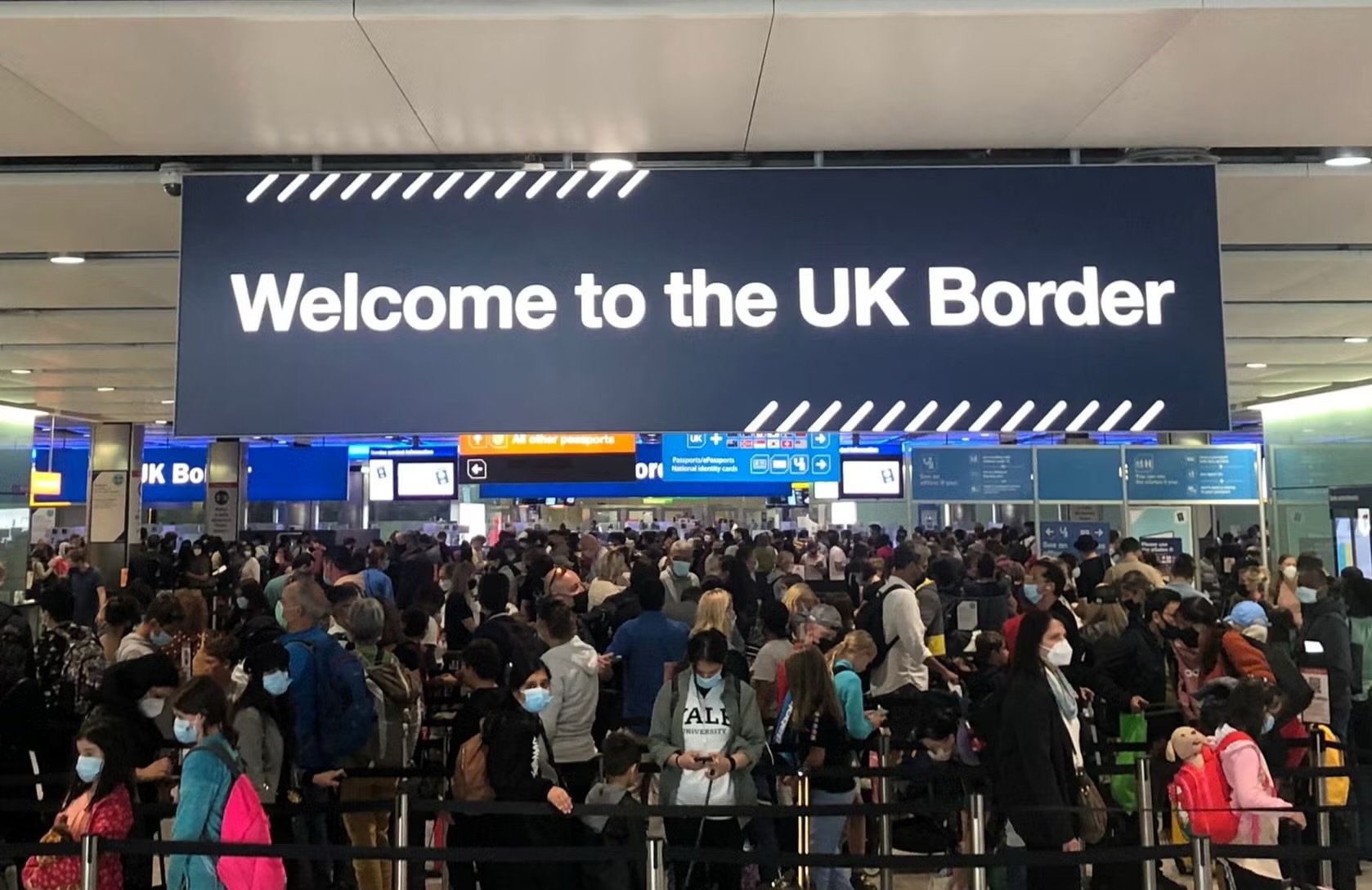
The UK immigration system has gone through some of its biggest changes in years, and anyone planning to move to Britain for work or study now needs to pay much closer attention to the rules.
Several changes introduced since 2025 are already in force, while another important change affecting international graduates is due to take effect from January 2027. The government says the wider reforms are intended to reduce reliance on overseas recruitment, raise skill levels and tighten control of legal migration.
For migrants hoping to come to the UK, the important point is that the changes do not affect everyone in exactly the same way. Your nationality, occupation, salary, English ability and type of visa can all make a major difference.
Here are five of the most important rules to understand.
1. Skilled Worker Visas Have Become Harder to Qualify For
One of the biggest changes affects people hoping to move to Britain through the Skilled Worker route.
Since 22 July 2025, the general skill requirement for new Skilled Worker jobs has been raised from RQF level 3, roughly equivalent to A-level standard, to RQF level 6, broadly graduate level.
This means many jobs that previously qualified for sponsorship are no longer automatically eligible for new overseas applicants.
There are exceptions. Some medium-skilled occupations can still qualify where the job appears on the Immigration Salary List or Temporary Shortage List. There are also transitional arrangements for certain people who were already in the Skilled Worker system before the changes.
Salary requirements have also increased.
For many Skilled Worker applicants, the standard requirement is now at least £41,700 a year or the going rate for the particular occupation, whichever is higher.
There are circumstances where a person can qualify on a lower salary, including some new entrants and people in certain eligible occupations, so £41,700 should not be treated as the minimum for every single applicant.
For example, someone might be offered £42,000 and assume that this automatically qualifies them. However, if the going rate for their occupation is £45,000, the £42,000 salary would normally not meet the standard requirement.
This makes the occupation code much more important than before.
A migrant considering a UK job offer should therefore check whether the employer has the necessary sponsor status, whether the occupation code is eligible, what the going rate is and whether the offered salary satisfies the rules applicable to that applicant.
The government also created the Temporary Shortage List to preserve access to certain medium-skilled occupations considered important to the economy.
The list includes a number of occupations that can continue to qualify despite not meeting the new general graduate-level skill requirement. Each occupation has its own conditions and salary requirements.
2. Overseas Recruitment of Care Workers Has Been Closed
This is particularly important because care work was previously one of the most popular routes used by overseas workers to enter Britain.
The government closed new overseas Skilled Worker entry-clearance applications for care workers and senior care workers from 22 July 2025.
In simple terms, a care company generally cannot now recruit a new care worker living abroad and bring that person to Britain through this route in the way employers were previously able to do.
The change covers care workers under occupation code 6135 and senior care workers under occupation code 6136.
However, this does not mean that every care worker already living in Britain immediately lost their immigration status.
The government introduced transitional arrangements, including provisions allowing qualifying in-country switching applications to continue until 22 July 2028.
That distinction is extremely important.
Someone living in Nigeria, Ghana, India or another country who sees an advertisement saying, “UK care job with visa sponsorship — move to Britain immediately,” should therefore be particularly careful. The old model of recruiting new care workers directly from overseas has been closed.
At the same time, somebody already legally living in the UK may be in a different position because transitional provisions can apply.
The change followed a dramatic expansion of overseas recruitment into social care. Home Office analysis showed that around 105,000 visas were issued to main applicants in social-care occupations in 2023, accounting for a large majority of Health and Care Worker visas issued to main applicants that year.
The result is a major change for people who previously viewed care work as one of the easiest ways of finding UK visa sponsorship.
3. Some Medium-Skilled Workers Can No Longer Bring Dependants
Another major change concerns migrants working in jobs below the new graduate-level Skilled Worker threshold.
The government created the Temporary Shortage List so that selected occupations below RQF level 6 could continue to access the Skilled Worker system temporarily.
However, there is an important restriction attached to this arrangement.
Workers relying on the relevant below-degree-level shortage provisions generally cannot bring dependants under these arrangements. The government specifically stated that workers in occupations on the Temporary Shortage List would not be able to bring dependants.
This can have a major effect on a migrant’s decision to accept a job in Britain.
Imagine, for example, that a married applicant finds an eligible medium-skilled job and receives sponsorship. The fact that the worker personally qualifies does not necessarily mean their husband, wife and children can automatically accompany them.
This is why migrants should not look only at whether a job qualifies for sponsorship. They should also check the dependant rules attached to their particular occupation and circumstances.
There are transitional protections for some people already on the Skilled Worker route.
Existing Skilled Workers covered by the transitional arrangements may have different rights, including in relation to extending their visas and bringing dependants.
The distinction between a new overseas applicant and somebody who was already on the Skilled Worker route before the rule changes can therefore be crucial.
4. English Requirements for New Skilled Worker Applicants Have Increased
English-language ability has also become more important.
From 8 January 2026, new applicants on the Skilled Worker route generally have to demonstrate English at B2 level on the Common European Framework of Reference for Languages.
Previously, the requirement was generally B1.
B2 is a higher standard and requires the applicant to demonstrate the required level of English across reading, writing, speaking and listening.
However, there are protections for some existing migrants.
If someone already held a Skilled Worker visa before 8 January 2026 and is extending or updating it, different transitional requirements can apply. Someone switching from another visa route into Skilled Worker under the newer rules may need to satisfy the higher English requirement.
Applicants do not necessarily have to take an English test in every situation. Depending on their circumstances, they may be able to satisfy the requirement through an eligible academic qualification or another accepted method.
The change is part of a wider government policy to increase English-language requirements across the immigration system.
There are also further changes affecting people seeking permanent residence. Rules published in 2026 provide for the English requirement for settlement on a number of immigration routes to increase from B1 to B2 from 26 March 2027.
That means migrants should think beyond simply getting their first visa. English-language requirements can also become important later when extending their stay or seeking permanent settlement in Britain.
5. Graduate Visas Are Being Shortened and Some Nationalities Face New Restrictions
International students also face an important change.
Most eligible international graduates can currently stay in Britain for two years under the Graduate visa if they apply on or before 31 December 2026.
But applications made from 1 January 2027 will generally receive only 18 months.
PhD and other doctoral graduates will continue to receive three years.
The Graduate visa is particularly important because it does not require employer sponsorship. It allows an eligible international student who successfully completes their course to remain in Britain and work or look for work.
Reducing the standard period from two years to 18 months gives many graduates six months less to find employment and, where appropriate, move onto another immigration route such as the Skilled Worker visa.
It is also important to understand that the Graduate route itself does not lead directly to settlement. A migrant who wants to remain longer normally needs to qualify for another visa before their Graduate permission expires.
There is an additional 2026 restriction affecting certain people hoping to enter Britain as students or workers.
From 26 March 2026, the UK introduced what the government calls a “visa brake.”
Under the rules, overseas Student visa applications from main applicants who are nationals of Afghanistan, Cameroon, Myanmar and Sudan are refused.
The measure also applies to certain Skilled Worker applications involving Afghan nationals.
Importantly, the restriction is based on nationality rather than simply where someone lives or submits their application.
It does not automatically cancel visas that had already been granted, and people already legally living in the UK can be in a different position when making eligible in-country applications.
The government has said the visa brake will be reviewed and is not intended to be permanent.
Taken together, these changes show how different the UK immigration system now looks compared with only a few years ago.
A person hoping to come to Britain through employment can no longer simply find any employer willing to offer sponsorship. The skill level of the job, occupation code, salary, shortage-list status and the applicant’s English ability can determine whether the application is possible.
For people hoping to work in social care, the change is even bigger because direct overseas recruitment for new care and senior care worker applications has been closed, subject to specific transitional arrangements for people already in Britain.
International students also need to plan much earlier. Students completing eligible bachelor’s or master’s-level qualifications who apply for the Graduate visa from January 2027 will generally have 18 months rather than two years, giving them less time to secure longer-term immigration status.
For nationals affected by the visa brake, the restrictions are more immediate because particular out-of-country Student or Skilled Worker applications are currently restricted.
There are also bigger immigration reforms still developing. The government has proposed a broader “earned settlement” system and changes to how long migrants may have to live in Britain before qualifying for permanent residence.
However, migrants should be careful about treating every government proposal as an existing immigration rule. Some measures have already taken effect, some have future start dates, and others may still require further changes to the Immigration Rules before they become law.
This distinction is important because UK immigration policy can change quickly.
Anyone planning to move to Britain in 2026 or 2027 should therefore avoid relying entirely on old social-media posts, YouTube videos or information from people who migrated under previous rules.
Before paying an immigration agent, accepting a sponsored job, paying university fees or making major travel arrangements, applicants should check the latest official requirements for their particular visa route.
The opportunities to work, study and build a life in Britain have not disappeared, but the requirements have become more demanding in several important areas. Understanding these rules before starting an application could save migrants thousands of pounds and prevent them from making decisions based on immigration routes that are no longer available.
