

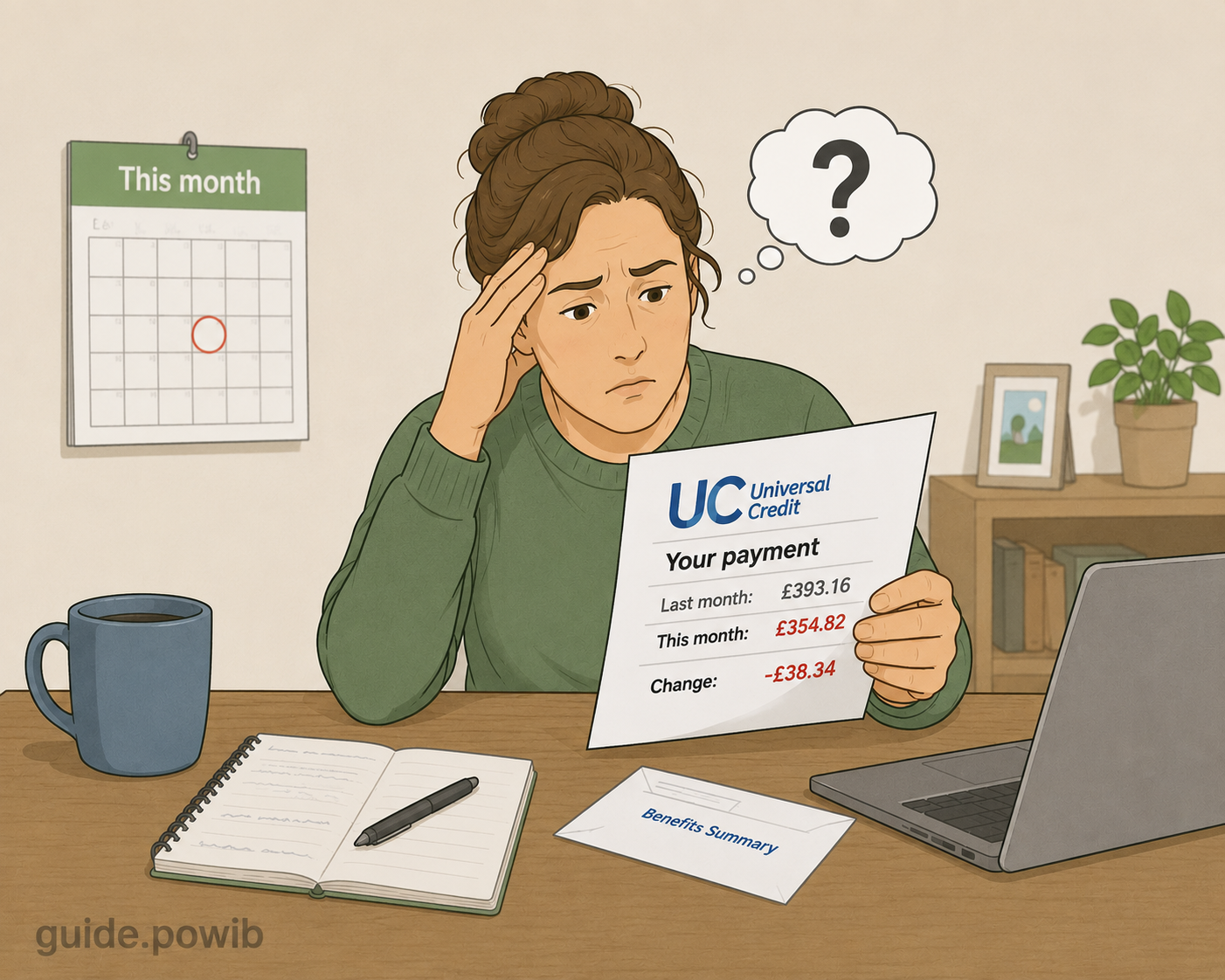
When Universal Credit payments go up, most people expect to see a little extra money land in their bank account. That’s why one claimant was left scratching their head after discovering their latest payment was almost £40 lower than usual, despite hearing that benefit rates had increased.
The claimant, who receives Universal Credit and is in the Limited Capability for Work and Work-Related Activity (LCWRA) group, noticed their payment had dropped from around £424 to £384.89.

Naturally, they thought something must be wrong.
After all, benefits had just gone up, so why were they receiving less money?
It’s a question that many claimants may be asking themselves right now. Across the country, some people are checking their latest Universal Credit statements and finding figures that don’t seem to make sense at first glance.
The reality is that Universal Credit can be far more complicated than many people realise. Sometimes your entitlement can increase while the amount that actually reaches your bank account stays the same or even falls.
The claimant explained that they moved over to Universal Credit about a year ago but still receive contribution-based Employment and Support Allowance (ESA). For months, everything had remained fairly stable. Then, without warning, their payment suddenly dropped.
Concerned that a mistake had been made, they began looking for answers.
As it turned out, there wasn’t one single reason behind the reduction. Instead, several parts of the benefits system appeared to be working together to create the change.
One of the biggest factors was Transitional Protection.
Many people who moved from older benefits onto Universal Credit were given Transitional Protection when they switched over. This extra payment was introduced to make sure people didn’t suddenly lose money during the move to the new system.
For example, if someone was receiving £1,300 a month through the old benefits system but would only qualify for £1,200 under Universal Credit, the Government would add an extra £100 to protect their income.
The important thing many claimants don’t realise is that this protection isn’t designed to remain untouched forever.
Over time, as other parts of a Universal Credit claim increase, the Transitional Protection can gradually reduce.
This process is often referred to as “erosion.”
In simple terms, if another part of your Universal Credit award rises by £20, your Transitional Protection may reduce by roughly the same amount. The result is that your overall entitlement stays much the same.
This catches many people by surprise.
They hear announcements about benefit increases and expect to receive more money, only to discover that their payments haven’t changed very much at all.
People who looked at the claimant’s figures suggested that this was one reason why the payment appeared lower than expected. The increase in some parts of the claim had been balanced out by a reduction in Transitional Protection.
But that wasn’t the whole story.
The claimant also receives contribution-based ESA, and this can have an impact on Universal Credit calculations.
A lot of people assume ESA and Universal Credit operate completely separately, but that’s not always the case.
Contribution-based ESA is usually taken into account when Universal Credit is calculated.
This means that when ESA payments increase, the amount deducted from Universal Credit can increase too.
As strange as it sounds, someone can end up receiving a slightly higher ESA payment while seeing less money arrive through Universal Credit.
That’s exactly what appears to have happened here.
Because ESA rates increased, the deduction within the Universal Credit calculation also increased. The change wasn’t huge, but it was enough to reduce the amount of Universal Credit paid directly into the claimant’s account.
For many people, this feels frustrating.
It can seem as though the Government is giving with one hand and taking away with the other.
However, when the entire benefits package is looked at together, the overall level of support may not have changed very much.
Housing costs also played a role.
The claimant’s rent had increased from £339.83 to £356.16, and that increase was reflected in their Universal Credit award.
At first glance, you might think higher housing support would automatically mean more money.
But that isn’t always how it works.
If the housing element is being paid directly to a landlord, the extra support never actually reaches the claimant’s bank account. Instead, it goes straight to the landlord to help cover the higher rent.
As a result, the claimant may see less money personally even though more support is being provided overall.
This is one of the most common misunderstandings surrounding Universal Credit.
Many people focus on the final amount that arrives in their bank account without looking closely at the full statement.
Yet the statement often tells a much bigger story.
Extra money may be going towards housing costs. Deductions may have changed. Transitional Protection may have been adjusted. ESA calculations may have increased.
All of these things can affect the final figure.
Those who reviewed the claimant’s situation generally agreed that there was no evidence they had lost entitlement. Instead, the lower payment appeared to be the result of increased ESA deductions, housing cost changes and adjustments to Transitional Protection.
For anyone who has recently noticed a drop in their Universal Credit payment, the first thing to do is check the statement carefully.
It’s easy to panic when a payment is lower than expected, but there is often an explanation hidden within the details.
Look out for changes to:
- Housing costs
- ESA deductions
- Transitional Protection
- Earnings
- Overpayment repayments
- Other deductions
Even relatively small adjustments can make a noticeable difference to the amount that eventually reaches your account.
Another issue that often causes confusion is the way ESA deductions are calculated.
Many claimants expect the figures to match the payments they receive every week or every two weeks. However, Universal Credit converts ESA into a monthly amount using its own formula.
This can make the deduction appear larger than people expect when they first look at their statement.
For disabled claimants and those in the LCWRA group, unexpected changes can be particularly worrying.
Many rely on their payments to cover essentials such as rent, food, energy bills and everyday living costs. A sudden drop of nearly £40 can create genuine anxiety, especially when there doesn’t seem to be an obvious reason for it.
That’s why it’s important not to jump straight to the conclusion that something has gone wrong.
In many cases, payment changes are linked to annual benefit increases, rent adjustments, ESA calculations or Transitional Protection rules rather than an actual reduction in entitlement.
If your Universal Credit payment has fallen recently, it may be worth asking yourself a few questions.
Has your rent changed?
Do you receive ESA as well as Universal Credit?
Did you move from older benefits and receive Transitional Protection?
Has an overpayment recovery started?
Has your housing payment arrangement changed?
Have there been any changes to your earnings or circumstances?
Any of these could affect the final amount you receive.
If you still can’t understand why your payment has changed, the best option is often to leave a message in your Universal Credit journal and ask for a detailed explanation.
You can request a breakdown of the calculation and clarification on any deductions that don’t make sense.
Welfare advisers and benefits support organisations can also help if you’re struggling to understand your statement.
The most important thing to remember is that a lower payment does not automatically mean your entitlement has been reduced.
In this claimant’s case, the evidence suggested that their entitlement remained broadly the same. What changed was how the money was being calculated and where some of it was being allocated.
For thousands of Universal Credit claimants across the UK, that’s an important reminder.
Sometimes the figure that lands in your bank account only tells part of the story.
The real explanation is often hidden in the small print of your Universal Credit statement.
